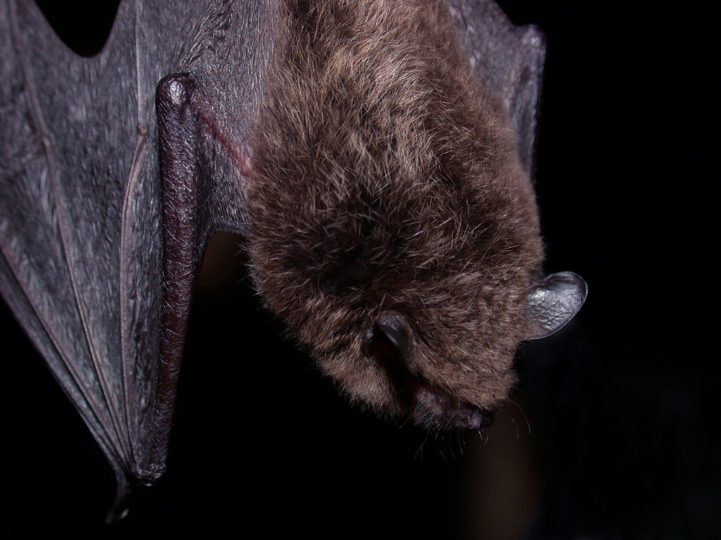
County public health officials are looking for people who may have come in contact with two bats found at separate locations in Escondido that later tested positive for rabies.
The first bat was around 4 p.m. on Saturday March 21, 2026, in a grass area near the White Oak Villas condo complex in Escondido. It was retrieved by the San Diego Humane Society.
The second wild bat was found the next morning, March 22, just after 10 a.m. on a rock wall outside of the Okavango Restaurant at the San Diego Zoo Safari Park. Officials emphasized that the bat was not part of a park exhibit. Visitors who did not touch the bat are not at risk.
The County Public Health Laboratory later confirmed both bats were infected with rabies.
If you or someone you know were in either of these areas at the White Oak Villas or the Safari Park and had direct contact with a bat, or you know of someone who may have touched a bat, you are urged to contact County Public Health Services as soon as possible at (619) 692-8499.
“Human rabies is almost always fatal without prompt post‑exposure vaccination and treatment,” said Dr. Sayone Thihalilopavan, County Public Health Officer. “Rabies can be transmitted through a bite or when an infected bat’s saliva enters a cut, scrape, or the eyes, nose or mouth.”
This is the fourth and fifth rabid bat the County has detected this year.
Public health officials remind residents:
- Do not touch bats or any wildlife
- If you have direct contact with a bat, wash the exposed area with soap and seek medical advice.
- Rabies symptoms can take weeks to months to appear, and once symptoms begin, the disease is almost always fatal. Prompt treatment is highly effective.
Rabies remains rare in humans due to prevention efforts. California’s most recent human rabies case occurred in 2024 in a Fresno County resident who was exposed to a bat in Merced County.
Find more information about bats and other animal testing for rabies visit the rabies dashboard for additional information rabies view the County’s website.
Bats play an important role in our local ecosystem. Many species of bats live in San Diego County, feeding on insects such as mosquitos. Other bat species feed on nectar from plants and pollinate them in the process. You may see bats occasionally around sunset when they are most active.