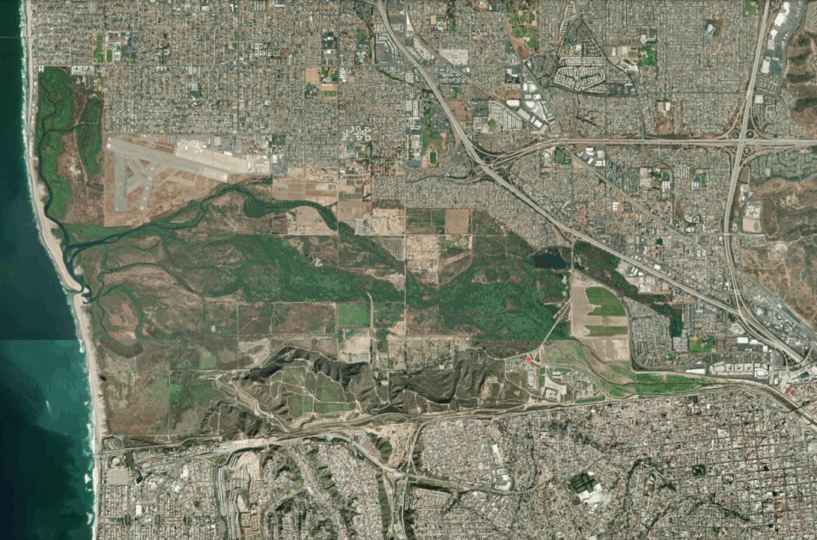
People living in the South Bay, especially those near the Tijuana River Valley (TJRV), are experiencing high hydrogen sulfide (H2S) emissions, often recognized by the strong rotten egg smell produced by untreated wastewater flows.
The rise in H2S emissions comes after a recent break in a sewage pipe in Tijuana called the Parallel Gravity Line.
The San Diego County Air Pollution Control District (SDAPCD) monitors report that average hydrogen sulfide emissions in the Tijuana River Valley exceeded the 4-hr Level 1 Federal Acute Exposure Guideline Level (AEGL) threshold of 360 ppb for a period between 10 p.m. and 4 a.m. earlier today and reached a one-hour average of 915 parts per billion between 1 and 2 a.m. Current and recent hourly H2S emissions are available online through the SDAPCD’s network of monitors.
The U.S. International Boundary and Water Commission (USIBWC) first reported the break over the weekend and has continued to provide updates.
The agency says repairs are being expedited, and USIBWC is pressing Mexico to complete them as quickly as possible. While Mexican authorities have indicated repairs could be completed as soon as the end of the week, USIBWC continues to urge an accelerated timeline to halt excess flows to the Tijuana River.
The flows are expected to cause an increase in stronger odors in the area.
The Parallel Gravity Line is currently being rehabilitated end-to-end under a binational agreement, part of the U.S.-Mexico commitment to a permanent solution to transboundary flows.
Visit the USIBWC official X site for the latest updates on the repairs.
“We are working closely with our partners at the USIBWC, SDAPCD and others and staying in close communication,” said Dr. Sayone Thihalolipavan, M.D., M.P.H., County Public Health Officer. “We really want to people who live, work or go to school in the area to know where they can find up-to-date information on H2S levels and what steps they can take to reduce their exposure to H2S.”
According to the U.S. Environmental Protection Agency, emissions exceeding the AEGL Level 1 can cause “notable discomfort, irritation, or certain asymptomatic non-sensory effects. However, the effects are not disabling and are transient and reversible upon cessation of exposure.”
“We are continuously monitoring hydrogen sulfide levels in the Tijuana River Valley to ensure residents are informed and safe, said Paula Forbis, Air Pollution Control Officer for the San Diego County Air Pollution Control District. “We encourage residents to visit our website for the latest information on hydrogen sulfide levels. Our monitoring network provides current data so you can stay informed and take the necessary precautions to protect your health.”
People in affected communities can take steps to reduce the impact of the hydrogen sulfide (H2S) by:
- Limiting their outdoor activities if odors are bothersome.
- Keeping doors and windows closed when odors are present and air out your home or building when odors improve.
- Increasing air circulation indoors using fans or air conditioning on recirculation mode.
- Running an air purifier with a high efficiency particulate air (HEPA) filter and activated charcoal with potassium permanganate, is particularly effective for H2S odors. Those purchasing air purifier can find a verified model with potassium permanganate on the California Air Resources Board (CARB) website and also get more information on a dedicated Tijuana River Valley website created by CARB.
- People who are more sensitive to air pollution like those with asthma, chronic obstructive pulmonary disease (COPD), or other chronic lung conditions should keep rescue medication(s) readily available. Anyone with persistent, worrisome, or worsening, symptoms should reach out to their medical care provider or seek emergency care if symptoms feel life-threatening.
To learn more and get additional resources:
- Sign up to receive email and/or text alerts when emissions surpass 30 parts per billion
- Current emission levels and other Tijuana River Valley pollution data are tracked on the County’s Tijuana River Valley dashboard
- Get Community Hydrogen Sulfide Guidance to follow when levels exceed 30 ppb
- River flows are monitored on US International Boundary and Water Commission (USIBWC) dashboards
A collaborative partnership that includes the USIBWC, U.S. Environmental Protection Agency (EPA), California Department of Public Health (CDPH), San Diego Regional Water Quality Control Board (SDRWQCB), San Diego County Air Pollution Control District (SDAPCD), and the County of San Diego has been working together since 2024 on the sewage treatment issues, progress updates and health concern guidelines.
The County also continues to coordinate with the Tijuana River Coalition, healthcare providers and community organizations to support affected residents.
More information about the ongoing pollution in the Tijuana River Valley and South County beach water is available from the SDAPCD, IBWC and the County’s dedicated Tijuana River Valley & Beach Water Sewage Crisis webpage.
Most recently the County opened up a survey to measure the economic impact of the chronic pollution and entered into a contract with the University of California San Diego to better understand how the pollution is affecting people living and working in nearby communities.