Chinese-Language Ballots Available for Nov. 6 Election
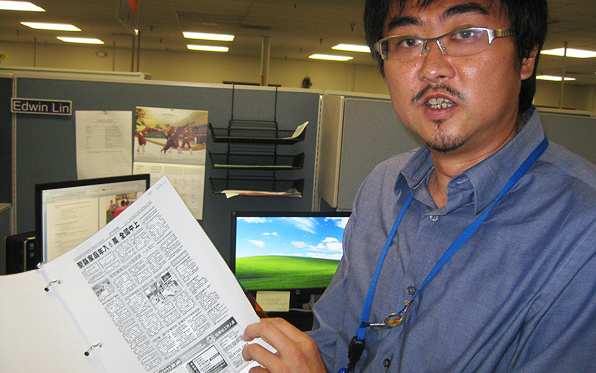

Voters will be able to cast ballots Nov. 6 in the County’s newest official election language: Chinese.
Increases in San Diego County’s Chinese speaking population led the County to add the idiom to its lineup earlier this year, which already includes English, Spanish, Vietnamese and Filipino. June’s primary was the first election to offer voters Chinese ballots, and Nov. 6 will be the first presidential election in which voters can cast ballots in the language.
“It is a major addition to our operations,” said Registrar of Voters Deborah Seiler.
In addition to translating all of the official ballot and other election materials into Chinese, her office has recruited and trained 126 new poll workers fluent in both English and Chinese. They will be posted at polling sites across the County that have sizeable numbers of Chinese speakers. Many of these polling locations are clustered along the I-15 corridor in areas such as Poway, Rancho Peñasquitos and 4S Ranch, and farther west in the Carmel Valley, Del Mar and UTC areas. Any voter interested in casting a ballot in Chinese can call the ROV’s office to request one.
The move to add Chinese was triggered by a provision in the federal Voting Rights Act, Seiler said. Counties must offer a new language when the number of its limited-English proficient speakers reaches either 5 percent or a total of 10,000 of the County’s voting age population. The local Chinese speaking population officially made it past the 10,000 population mark as of Oct. 2011, according to federal data.
Seiler said her office has ordered a little more than 8,000 Chinese ballots to be placed in 537 precincts for the election.
Edwin Lin joined the County’s Registrar of Voters in April to help lead efforts to add the language. Lin, whose title is Chinese Coordinator, Volunteers and Public Services, was born in Hong Kong. He is the only permanent, full-time Chinese language outreach worker, but the County also has hired five temporary election workers fluent in a few Chinese dialects. The staff has used their varying expertise to make sure speakers of all dialects can understand the written Chinese election materials.
A huge effort has gone into translating all the ROV’s election materials into Chinese, from the ballots and sample ballots to voter registration cards and more. Everything the ROV sends out will be either fully translated or will note that a translated version is available, Seiler said. A Chinese-language version of the ROV website is also available.
Those expected to benefit most are Chinese speaking U.S. citizens who are not fully fluent in English or who have little experience voting in their native countries, Seiler said.
Lin said he’s come across numerous local Chinese speakers who have never voted before and need help with the basics of the election process.
Among the top priorities is just getting the word out that Chinese ballots are available.
“We don’t have a China town, the community is spread out,” Lin said of Chinese speakers in San Diego County.
To reach them, Lin and other staffers have visited retirement homes, Chinese language schools, Chinese-American community groups and other spots around the County. They answer questions by phone and e-mail every day, too. Election Worker Jason Tong, a recent UCSD graduate who speaks both English and Chinese, has focused especially on connecting with younger people, including high school and college-age students. Even if they prefer to vote in English or aren’t old enough to vote themselves, they can tell their older, voting age family members about the new Chinese ballots.
For more information, visit www.sdvote.com or call (858) 565-5800.