County Reentry Center Delivers Immediate Support After Prison Release
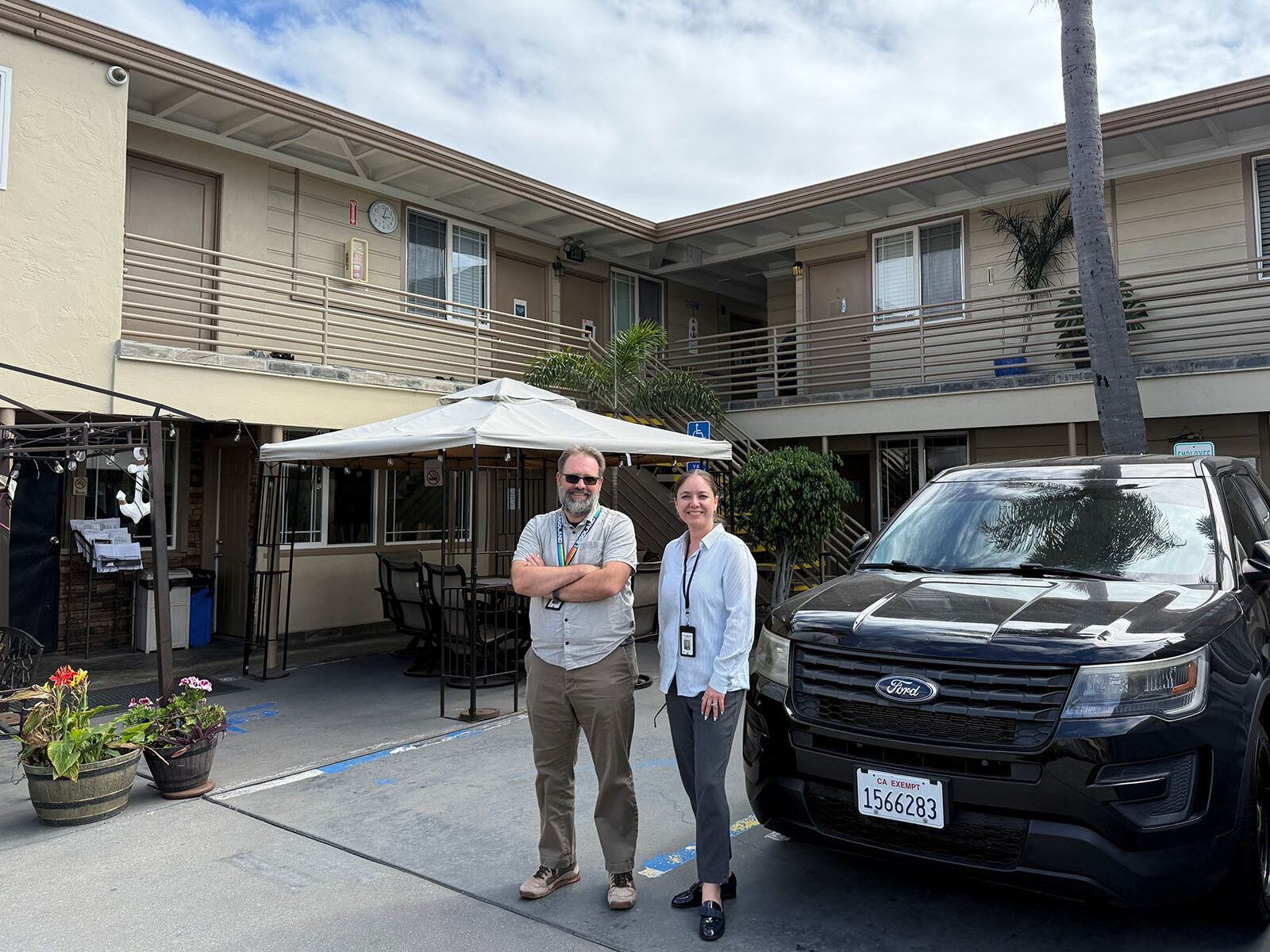

San Diego County Probation opened the Community Transition Center (CTC) 13 years ago as a centralized reentry program to support people immediately upon their release from prison. It remains the only program of its kind in California.
Located alongside the Lighthouse residential substance-use treatment program, the CTC brings critical reentry services under one roof. During a 2‑3-hour intake, a multidisciplinary team—licensed behavioral health clinicians, a nurse case worker, Medi‑Cal access staff, a Medication‑Assisted Treatment liaison, a residential treatment provider and Probation Officers—conducts assessments and starts case planning.
“CTC exemplifies our department’s commitment to delivering quality, evidence-based services to our clients,” said Chief Probation Officer Tamika Nelson. “Using a person-centered approach focused on rehabilitation, Probation helps connect our clients to services that are tailored to their needs, including housing, mental health, substance use treatment, medical care, and family support.”
Immediate Support from the Moment of Release
Each year, about 1,000 people on post-release community supervision (PRCS) come through the CTC, said Supervising Probation Officer Nathan Becraft.
In many counties, people are released with little guidance and must navigate transportation, housing and mandatory reporting on their own. In San Diego, clients are transported directly from prison to the CTC, where they meet with a Probation Officer, receive a meal, clothing if needed, a phone to make appointments and access to a safe bed if they have nowhere to stay.
Since opening, the CTC has screened and assessed more than 23,800 people, diverted over 2,400 clients from custody, and saved more than 17,100 jail days—all while improving long‑term public safety.
One 68-year-old client described the impact. “If it weren’t for this place, I’d be homeless. I was in a hopeless situation, and this place has really given me hope.” Staff from Lighthouse and Probation connected him to a follow-up residential program to support his sobriety.
Comprehensive Services to Support Stability
Clients can access detox services, transitional housing, substance use education, cognitive‑behavioral programs, employment resources and life‑skills classes. The center offers up to 36 beds for people who need housing, with additional capacity for withdrawal management.
People with immediate housing needs are encouraged to stay while awaiting placement in treatment, sober living or other housing. Those without urgent housing needs can still access services. “Some (clients) are not ready to receive services, and they are welcome to return when they are,” said Martha Gutierrez, supervising probation officer.
Staff and clients say the center becomes a supportive community. Former clients often stop by to share updates—new jobs, stable housing or continued sobriety—offering encouragement to those who are just entering the program, reports Ingrid Dul, of the Lighthouse 90-day residential treatment program.
A Countywide Response to State Realignment
The County launched the CTC in 2013 in response to State Assembly Bill 109, which shifted responsibility for supervising people convicted of non‑serious, non‑violent and non‑sexual offences from state parole to county probation.
For eligible individuals, CTC also serves as an alternative to incarceration, reducing jail crowding and helping clients address underlying needs rather than cycling back into custody.
Staffed 24/7, 365 days a year, the CTC provides structure, accountability and immediate support, demonstrating the County’s commitment to practical, evidence-based approaches that help people succeed and strengthen community safety.