Leaders Across the State Call for Continued Mobile Crisis Funding
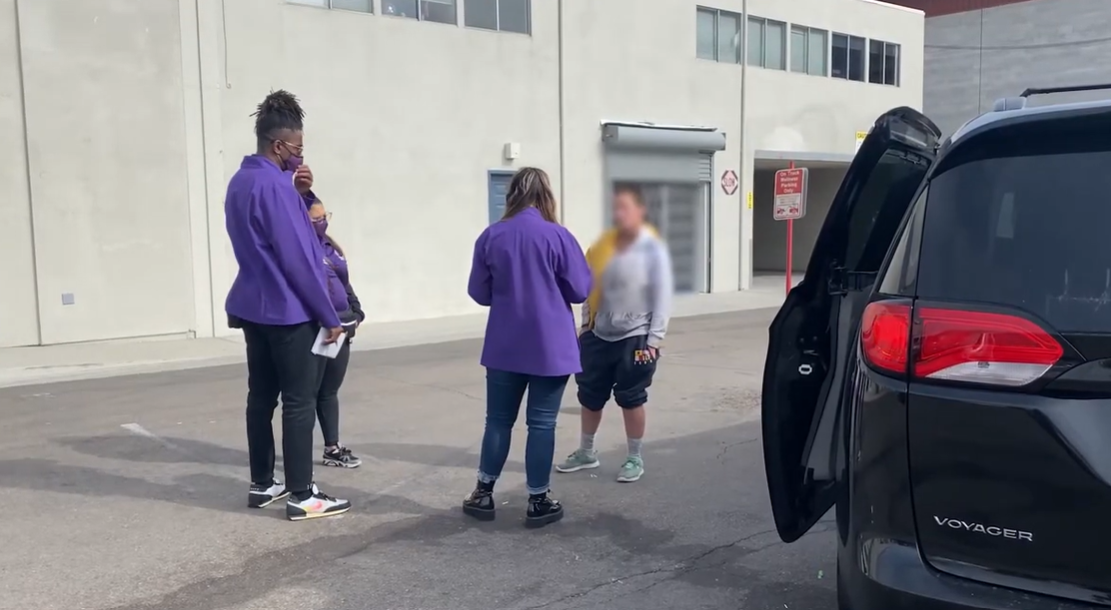

Behavioral health leaders across California and the San Diego County Sheriff gathered yesterday to highlight the lifesaving impacts of Mobile Crisis Response Teams (MCRTs) as state budget cuts put the future of services at risk.
Mobile crisis services were authorized in 2021 under the American Rescue Plan Act with an 85% federal match for participating states. The State covers the remaining 15% share of cost. The federal match is slated to drop to 50%, increasing the State’s share of cost to 50% and prompting proposed state-level funding changes.
Under the Governor’s budget proposal, mobile crisis response would no longer be a mandatory statewide Medi-Cal benefit. Beginning April 1, 2027, the service would become optional for counties, allowing the State to eliminate funding for the services.
Counties wanting to continue the mobile crisis service would then be responsible for $168 million in statewide costs, a shift that could prompt local programs to scale back.
In San Diego County, 44 MCRTs bring trained mental health clinicians, case managers and peer support specialists to people experiencing mental health or substance use crisis. The teams help deescalate situations, stabilize people where they are and reduce the use of emergency rooms and law enforcement response.
“Mobile Crisis Response Teams have become a staple in our behavioral health system and a regional asset,” said County Behavioral Health Services Director Nadia Privara Brahms. “They are arguably the most effective behavioral health intervention added in decades. Eliminating state funding would undo years of progress, especially for underserved communities.”
Since launching in 2021, local teams have responded to 32,000 calls. Of those, 80 percent were diverted from emergency rooms and about 18 percent were diverted from law enforcement intervention, helping officers remain available for other emergencies.
“Mobile Crisis Response is a force multiplier. It supports first responders, keeping deputies focused on high priority calls while ensuring people in crisis receive the care they need,” said San Diego County Sheriff Kelly A Martinez. “Mobile Crisis Response must be a priority for the Governor, it improves safety, compassion and is smarter public service.”
The teams also help people avoid unnecessary hospitalization or jail time and connect people to long term behavioral health support and housing.
Locally, the County has also expanded MCRTs to Tribal communities and K-12 schools, colleges, and universities. Over the last 18 months the teams have responded to more than 600 calls in schools.
The program costs $24 million locally and is funded primarily through state and Medi-Cal funding, with some local funds to support people who are uninsured.
Mobile Crisis Response Teams are available 24 hours a day, seven days a week to support people of all ages who are experiencing mental health or substance use crises. Services are offered in English and Spanish, with interpreter services available for other languages.
To request MCRT, call 9-8-8. A trained counselor will determine the appropriate response and can dispatch MCRT directly.
A Zoom recording of the press conference is available online. The passcode is BtHm+y2f.