The stigma that surrounds mental illness can stop people from getting the help they need.
Sometimes stories in the media can perpetuate stereotypes or even sensationalize the actions of someone with a mental illness.
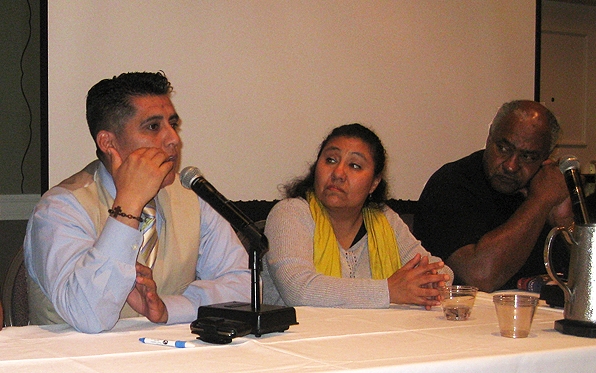
For that reason San Diego County mental health experts helped organize a panel with journalists recently to answer questions and to encourage reporters to show stories that are accurate, but can also help reduce the stigma.
“I am excited to have this panel. The media can help educate the community and to do it without sensationalism because it contributes to the stigma,” said Piedad Garcia, director of mental health services for adults and older adults for the County. “We need the media to bring some sensibility when putting out the message, especially because of the large audience that they reach.”
The workshop was one of more than 30 presented at the 18th Cultural Competence Mental Health Southern Region Summit, hosted by the County Health and Human Services Agency.
The focus of the two-day conference, attended by more than 500 people from throughout the state, was how to bridge the cultural gap that keeps minorities from seeking help for a mental illness.
The media panel consisted of Kenny Goldberg, KPBS Radio health reporter; Julio Cesar Ortiz, senior reporter for the Los Angeles Univision affiliate; Lilia O’Hara, editor of Enlace Newspaper and John Warren, Publisher of Voice and Viewpoint.
For 90 minutes, the four journalists answered questions on covering mental health and the elements a story must have in order to generate interest from the media.
“I am here because Univision supports this,” said Ortiz, who is so committed to bringing mental health issues to the forefront he got a license as a Marriage and Family Therapist.
His station, he said, is behind him 100 percent and gives him the opportunity to do in-depth stories on mental illness—most of them focusing on the correlation between immigration and mental illness—two Fridays each month. The stories are then followed by a panel of experts the next day who discuss the issue at length.
Warren told the audience of mental health experts they needed to be careful which media outlets they work with.
“If you know that all a media outlet does is sensationalize stories, walk away,” he said.
The main complaint from workshop attendees was how the media chooses to only cover sensationalistic stories, such as high-profile suicides and murder suicides.
Goldberg, who moderated a panel in September about media coverage of suicides, said journalists have to cover those types of stories. But he said after covering initial breaking news, he covers the related issues and always tries to speak with mental health experts.
When asked how often their respective media outlets cover issues related to mental health, one panelist responded that “we don’t just sit around waiting for someone to jump off a bridge.”
Ortiz immediately shot back.
“We need to change the stereotypical way of looking at mental health stories,” he said. “Mental health is more than just suicides. Mental health is about success and recovery, stories that will uplift those affected, as well as their families.”
The final question was whether the media outlets would try to write more stories on mental illness or encourage reporters to cover the issue.
The panelists all said they would.
“It’s been an awareness for me,” O’Hara said. “I’ll bring the awareness to my reporters.”
People suffering from a mental health challenges or a substance abuse problem can access services by calling the County’s 24-hour, multi-lingual Access and Crisis Line at (888) 724-7240.