Primary Care on Wheels
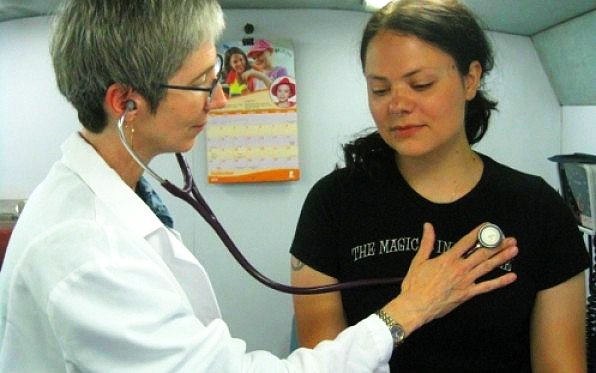

She tried to pay attention to her drug treatment counselors, but the constant stomach pain would not let Erika George concentrate.
“I had some really bad bouts of stomach pain,” said George, 27, who is in treatment for alcoholism after a second arrest for driving drunk.
George did not have a primary doctor. She figured there wasn’t much she could do. But that wasn’t true.
The solution to her medical problem was in the parking lot of Mental Health Systems—Harmony West Women’s Recovery Center: a mobile primary care clinic.
The mobile clinic, operated by Family Health Centers of San Diego, goes to the treatment center once each month. The bus also makes the rounds to other County-funded women’s treatment centers in the region.
The clinic offers primary care services to the women in treatment, their children, spouses or significant others.
“Everybody gets seen,” said Jean Ávila, women’s services program manager for the County’s Health and Human Services Agency.
Most of the women at Harmony West, an intensive outpatient treatment program, have lost their children because of their drug addiction and must complete the program before they can get them back.
The women use public transportation to get to the site on Mission Gorge Road in Grantville. Sometimes, it takes them hours to get to their three and half hour treatment sessions, which take place five days each week.
If the women also have to see a therapist or go to other appointments, their day is practically done. Getting to a doctor is their last priority.
The primary care services are provided at treatment centers as part of the County’s Live Well, San Diego! initiative, which aims to improve the health and well-being of area residents.
“Women who are in the process of recovery from substance abuse typically don’t access primary care services,” added Ávila. “We try to bring everything in one place; otherwise they forego their primary health.”
The mobile clinic offers every service provided at any primary care facility. The women pay for services through Medi-Cal or other public assistance program.
“It’s a primary care clinic on wheels,” said Jennette Shay, Director of Government and Community Relations for Family Health Centers. “We try to break down every barrier to care. We make services more convenient. The goal is to link people with a medical home and connect them to permanent primary care.”
“They have so many things to do to get their children back…getting them to a doctor was a huge challenge, even if they knew there was a medical issue,” said Terry Aperule, program manager of Harmony West, which currently serves about 40 women. “It’s such a blessing to have the clinic here. We’re very fortunate to have the services.”
No one is more grateful than George. She was diagnosed with severe acid reflux, is on medication and has changed her diet to improve her condition.
“They’ve been nothing but wonderful,” said George, one of 12 women who were seen at the clinic last week. “(The clinic) has helped my recovery. It gives the women the ability to take care of themselves physically and mentally.”