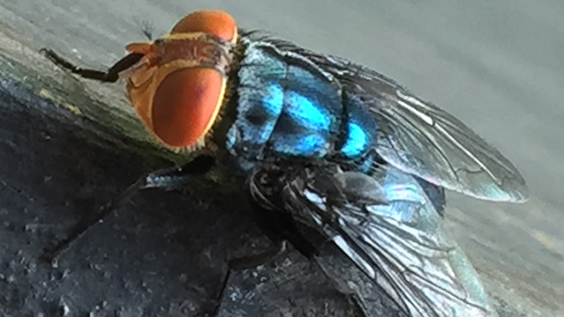
County public health officials are issuing new guidance to help protect people and animals from the New World screwworm after recent animal cases were confirmed in Texas and New Mexico. No cases have been detected in California or San Diego County.
The New World screwworm, eradicated in the United States in 1966, is a parasitic fly that lays its eggs on open wounds. After hatching, the larvae feed on living tissue, causing severe pain, infection, and sometimes death.
“While the screwworm has not been detected in our region and the current risk is low, it’s reappearance in the United States is a reminder to take steps to protect ourselves and the animals in our care,” said Dr. Sayone Thihalilopavan, County public health officer.
County officials urge residents, animal owners and health care providers to stay alert and routinely check pets, livestock and wildlife for wounds or unusual behavior, such as headshaking or irritation. Animals with open wounds or signs of infestation should be taken to a veterinarian immediately.
People may be at higher risk if they have open sores or recent surgical wounds, weakened immune systems, or reduced ability to notice or care for wounds. Others at increased risk include those who sleep outdoors (especially during the day when the parasitic flies are most active) and those who live or work near livestock or other warm-blooded animals.
Symptoms in people can include painful or unexplained wounds, bleeding or drainage, a noticeable odor or seeing or feeling maggots in a wound.
People can reduce their risk by keeping wounds clean and covered, wearing long sleeves and pants in areas where the pest may be present, using insect repellent, and sleeping indoors or in screened areas when traveling in regions where New World screwworm is found, including Mexico, Central and South America, or the Caribbean.
For more information and updates, visit the County’s New World Screwworm webpage.
County Public Health Services and the Vector Control Program work year-round to protect the community from vector borne diseases and other public health threats. The programs conduct surveillance, provide community education, perform inspections, and respond rapidly to reduce risks to people and animals.