Dun-dun.
Dun-dun; dun-dun.
Dun-dun, dun-dun, dun-dun, dun-dun … Jaws!
Just below the surface of the water in a backcountry pond near Lake Hodges and in several 500-gallon barrels at the San Diego County Operations Center, thousands of tiny little jaws wait patiently.
But unlike the giant shark in Steven Spielberg’s movie “Jaws,” they’re waiting to help the public — not terrorize it — by gobbling up mosquito larvae before they can turn into adult mosquitoes, “vectors” that can spread diseases including West Nile virus.
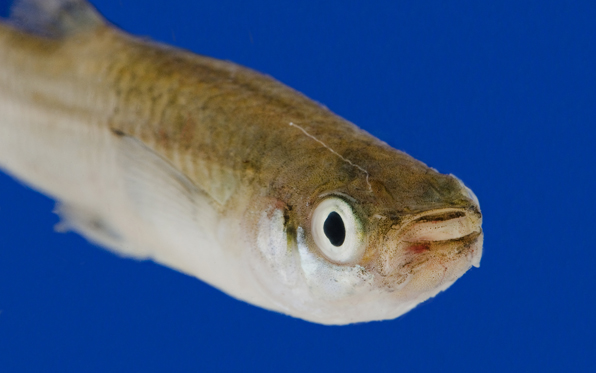
The jaws belong to gambusia affinis, better known as mosquito fish.
San Diego County vector control folks have been raising them and giving them away free to residents and businesses at nearly a dozen different locations around the county for as long as anyone can remember — to put into ornamental ponds, fountains, bird baths, neglected swimming pools, and even horse troughs to help keep mosquito numbers low.
Mosquitoes multiply when females lay their eggs in stagnant water. The eggs morph into larvae, pupae, and finally fly away as adult pests —typically in seven to 10 days. Mosquito fish, meanwhile, are aggressive and voracious eaters despite their small size.
Female mosquito fish grow no bigger than 2 ½ inches in length but are normally smaller; males don’t get much bigger than 1 ½ inches. But a single large female fish can eat mosquito larvae nearly as fast as they emerge from their eggs, several hundred a day. Because they don’t just eat mosquito larvae and are not native to California, the County instructs people to use mosquito fish only in manmade water sources and to not put them into natural habitats such as lakes, streams or creeks where they can disrupt ecosystems.
“Every spring we get a big flood of calls for them,” Steve Rivera, the vector control supervisor who oversees the program, said this week as he watched a restocking of the pond. “We don’t know how many individual fish we give out, but it’s been thousands over the years.”
Longstanding Remedy
Mosquito fish have been around for a long time. Agencies around the world and across the U.S. started using them nearly 100 years ago to fight mosquitoes and the diseases they can carry — most famously, malaria.
But since 2003 when West Nile virus first appeared here in San Diego County, mosquito fish have been best known locally for being one of the more interesting components of San Diego County’s wide-ranging West Nile virus-prevention “Fight the Bite” campaign.
In addition to giving out free mosquito fish, the County has used helicopters and workers with backpack blowers to routinely drop and spread granular, cereal-like larvicide — deadly to mosquito larvae but harmless to people and pets — on local waterways. It’s also created websites and printed material to teach people how to protect themselves, visited schools with educational posters and brochures, and created Internet and text notification systems.
Statistics suggest those measures have helped. Even as human West Nile virus cases reached epidemic proportions across the country this year, San Diego County remained largely untouched. An Escondido man who tested positive for West Nile virus when he donated blood this summer did become the county’s first human case of the disease in nearly three years. Fortunately, he did not get sick. Meanwhile, across the country this year, more than 3,000 people have gotten sick in 48 states, and 134 have died, including six people in California, according to the national Centers for Disease Control and Prevention.
The Pond, and Beyond
The County’s main stock of mosquito fish is kept at the man-made pond near Lake Hodges, hidden away behind the gates of an old City of San Diego water reclamation plant amidst the chaparral and scrub.
Mosquito fish are born live and typically live one to two years. Females mature in about six weeks, and can produce anywhere from about 30 to more than 1,300 baby fish in a single season. They’re typically grey or olive in color and have upturned mouths that make it easy to eat by skimming the surface of the water.
County crews visit every week to feed the fish by spreading floating fish pellets on the pond — and during West Nile virus season — to trap fish to bring to the “holding tank” barrels at the County Operations Center in Kearny Mesa.
Workers collect the fish by dropping a small trap, a foot-long wire basket into the pond that has inverted funnel-shaped holes at both ends that make it easy for fish to swim in but hard to swim out.
Once trapped, the fish are loaded into 45-gallon trash cans, and driven to the operations center on the back of a flat-bed truck. At the center, the fish live a good life. They’re fed, the babies are separated out and away from the parents when they’re born (to keep mom and dad from eating them — yup, they have cannibalistic tendencies). Rivera and others even scrub their big black barrels with brooms, to make sure they’re not tainted by algae.
Finally, fish are loaded back into the 45-gallon trash cans, or smaller buckets, put back on to the flat-bed truck or smaller trucks, and taken to the different spots where they’re made available to the public, including San Diego Pet Supply downtown, Koi City in Escondido, Kahoots Feed and Pet Supply in Ramona and Walter Anderson’s Nursery in Point Loma.
Rivera said that “two to three” fish are enough to get most folks started. And they come with relatively easy instructions. For example, when people first bring the fish home they should allow them to get used to their new surroundings by placing the plastic bag containing the fish into the new water source (pond, pool, etc.) Just wait about 15 minutes, until the water in the bag is the same temperature as the pond water; then release the fish from the bag.
During the summer months when mosquitoes are breeding and plants are growing, you probably won’t have to feed your new mosquito hunters. But if their new home doesn’t have any plant life, you should give them fish food flakes twice a day. Mosquito fish will live happily alongside other types of fish in ponds, but give them some rocks and vegetation to hide among if the other fish are bigger.
From there, it’s watch out mosquitoes — and cue up the music.
Dun-dun.
Dun-dun; dun-dun …jaws!
Here’s where to find the list of places you can get mosquito fish. For more information about mosquito fish, visit DEH’s website.