County Probation is putting therapy and facility dogs to work in a “pawsitive” way at its youth facilities in Kearny Mesa and Otay Mesa. The program is so successful and benefits are so substantial that the Probation Behavioral Health Services Unit added its own facility canine, and her name is Coco Brulé.
Coco is a 3-year-old English Labrador retriever, fully trained and certified by Pawsitive Teams, a local nonprofit that specializes in training service, facility, and therapy canines to help with canine-assisted, goal-oriented interventions. Each therapy dog receives about two years of training before it can come to work in a facility. Just like Coco, her two handlers are also trained and certified every year.
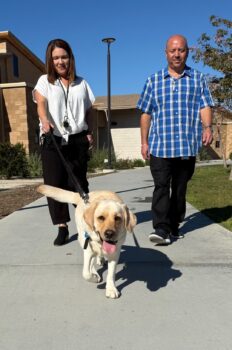
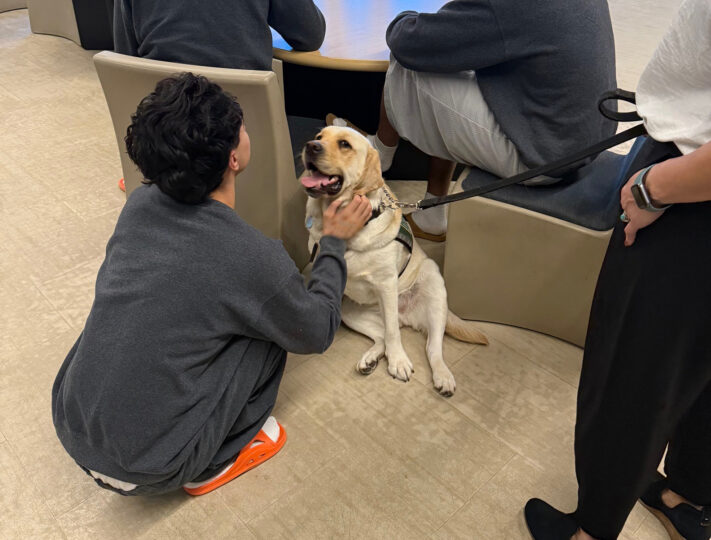
Known for her expressive eyes, the yellow Labrador makes frequent rounds at the Youth Transition Campus and the East Mesa Youth Detention Facility, eliciting smiles and outstretched hands from young people and adults alike. She offers comfort, helps with emotional regulation, and creates a calming atmosphere for youth in custody. Coco is also a valued highlight of Probation’s employee wellness program.
Handlers say Coco is especially effective during tense moments with teens. They describe her as an extension of their team during difficult conversations with youth who may be withdrawn or overwhelmed.
“She really is amazing and is changing lives, including ours,” said Araceli Ramos, Coco’s primary handler and Probation’s Behavioral Health Program manager. “I feel like she can actually look into people’s souls.”
Ramos, who is also a licensed clinical social worker, recalled an incident when Coco was requested for a teen having a panic attack. Coco approached, lifted herself onto the bench, tucked her head under the teen’s chin, and held on. The teen calmed down and formed a strong connection with her during his stay.
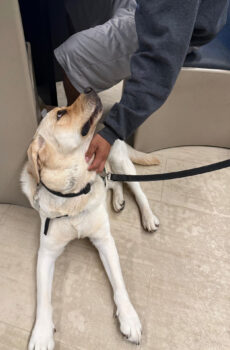
Probation staff also note Coco’s keen perception skills. In one instance, she stopped in a hallway to sit beside a staff member who later shared they were having a difficult day.
The department is considering adding a second facility dog to support both youth facilities.
“She was absolutely born for this job and this facility,” said Randy Valderrama, an alcohol and drug program specialist, who is also Coco’s secondary handler.
Pawsitive Teams also partners with Probation on a six‑week canine‑assisted program for youth who have experienced trauma, family disruptions, or low self‑esteem. The program teaches trust, communication, body‑language awareness, managing distractions, and building self‑confidence — skills that support rehabilitation and emotional growth.
The program launched in October 2024. More than 50 young people have participated so far. Each six‑week session ends with a small graduation, where participants share reflections, run an obstacle course with their dogs, and receive certificates and a keepsake photo keychain.
Youth say the program helps them manage their emotions, communicate more clearly, and build confidence. Staff also say the Therapy dogs support teamwork and wellness in an environment where stress can run high.
By shifting the role of dogs in correctional settings from detection to emotional support, the program offers a more compassionate, evidence-based approach to rehabilitation. Early results show that therapy and facility dogs like Coco can play a meaningful role in transforming juvenile justice environments.